Tales of Tribute:
Turning an RPG into a Card Game
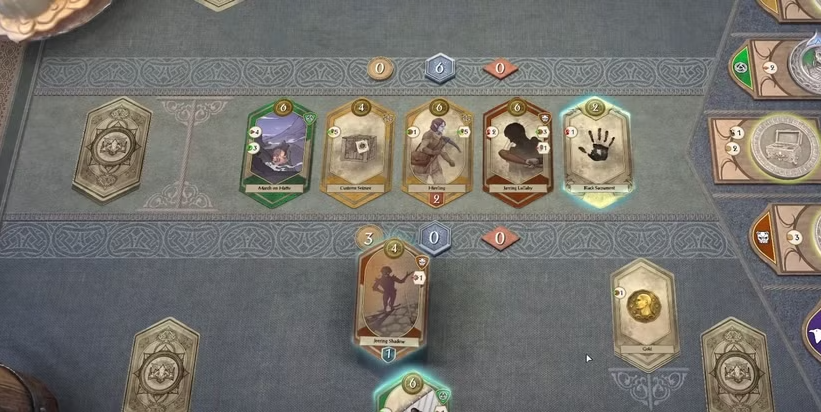
In 2022, Elder Scrolls Online was preparing to launch a new DLC, High Isles which came an ambitious project: create a new activity for players between dungeons and PvP sessions. This activity brought in designers from different departments: content, systems, and I represented the combat team. Working alongside a large group of designers with different background pooled together a variety of ideas which coalesced into a card game that combined deck building, collecting, and lore integration. This game would eventually be known as Tales of Tribute.
Prototyping and Playtesting
From Paper to Screen
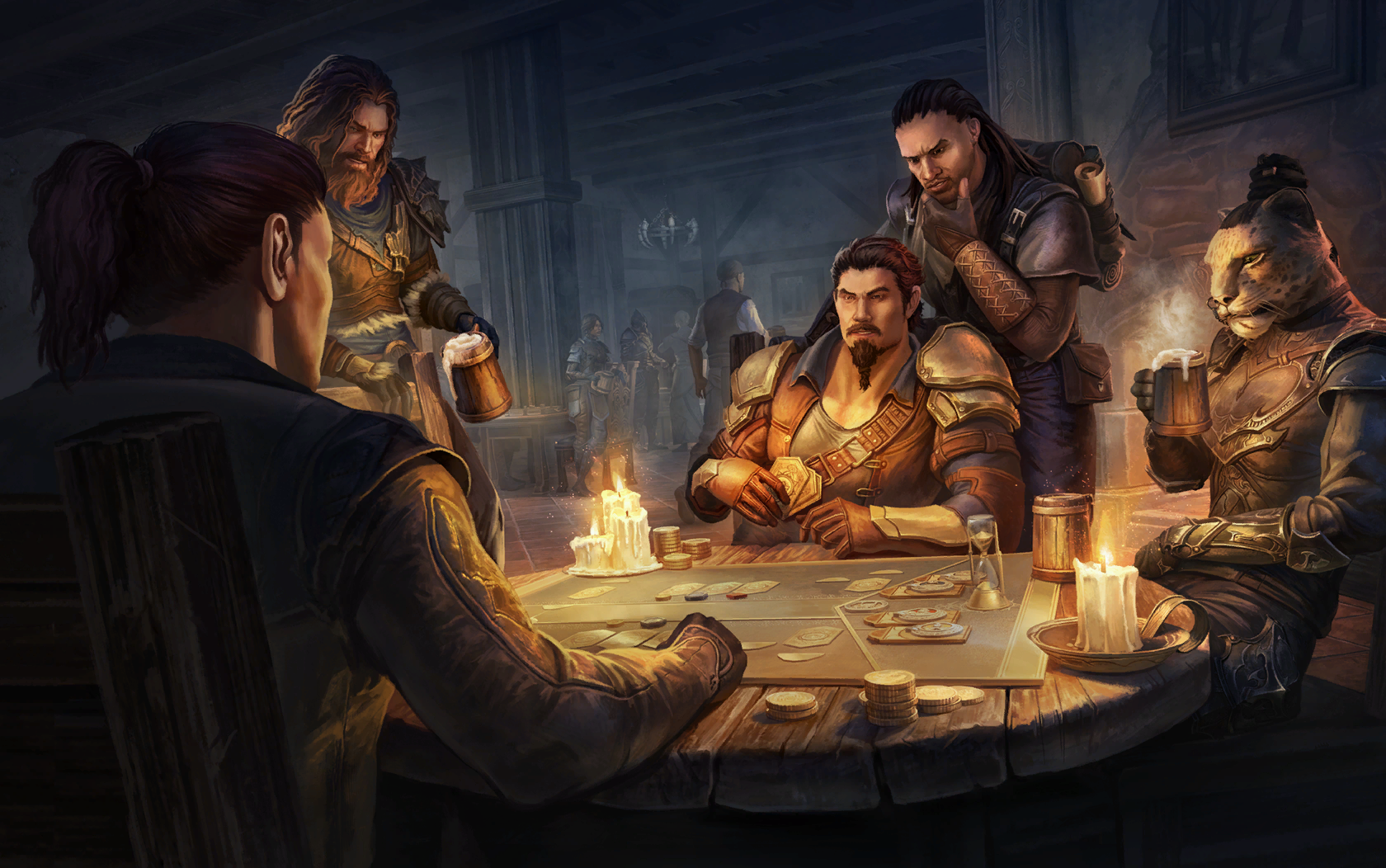
Tales of Tribute started as a paper prototype made from card stock and markers. Hundreds of cards with counters and effects were made and hours long playtest sessions went into nailing down the core mechanics of the game. Once the mechanics were finalized, our team split off into individuals to create their own decks to playtest.
During this time, I created three decks:
A deck focused around currency. This eventually became the Hlaalu Deck
A deck that’s powerful, but gives your enemy boons. This eventually became the Mora Deck
A deck that grows stronger the more diverse your playstyle is. While this deck was considered, it was eventually cut.
My final challenge before finalizing the product was creating the NPC AI units that players could challenge, covering three levels of difficulty.
Deck Building
Creating the Launch Decks
Tales of Tribute was to release with 8 decks at launch. 4 of these decks would be given to players automatically and act as starter decks, introducing players to the various play archetypes. The other 4 decks were to be collected by completing various challenges and quests, acting as more advanced decks that required higher skill to play.
I was told to design one started deck and one advanced deck:
My starter deck was Hlaalu, themed after the commerce nobles of the Dunmer race. Gold is one of the three prime resources in Tales of Tribute, and I wanted to make a deck that centered around it. At its core, the deck has a lot of cards that produce Gold that allow you to buy items in the Store or receive buffs from certain patrons. Hlaalu cards also can earn free items from the Store. The Hlaalu Patron sells your cards to gain Prestige Points. This deck has no win condition outside of the Patron, but the Gold generation allows players to build a strong resource foundation early on and then use other decks to earn Prestige.
My advanced deck was Rajhin, themed after Tamriel’s most legendary thief. This deck was inspired by control decks from card games like Magic the Gathering. Rajhin has no way to earn the player Victory Points. Instead, this deck acts like a disruptor. It forces your opponent to discard cards, kills their Agents, and destroys their Victory Points. The Rajhin Patron adds Blank cards to the enemy deck, giving them useless cards when they are drawn. Rajhin’s biggest weakness is being unable to win on his own, and a player must carefully balance controlling the match with achieving victory using other decks.
Driving Engagement Through Competition
I was tasked with creating the competitive framework which would drive skill progression. My goal was to create a system that would reward both casual and experienced players. I achieved this by splitting competition through two styles of progression.
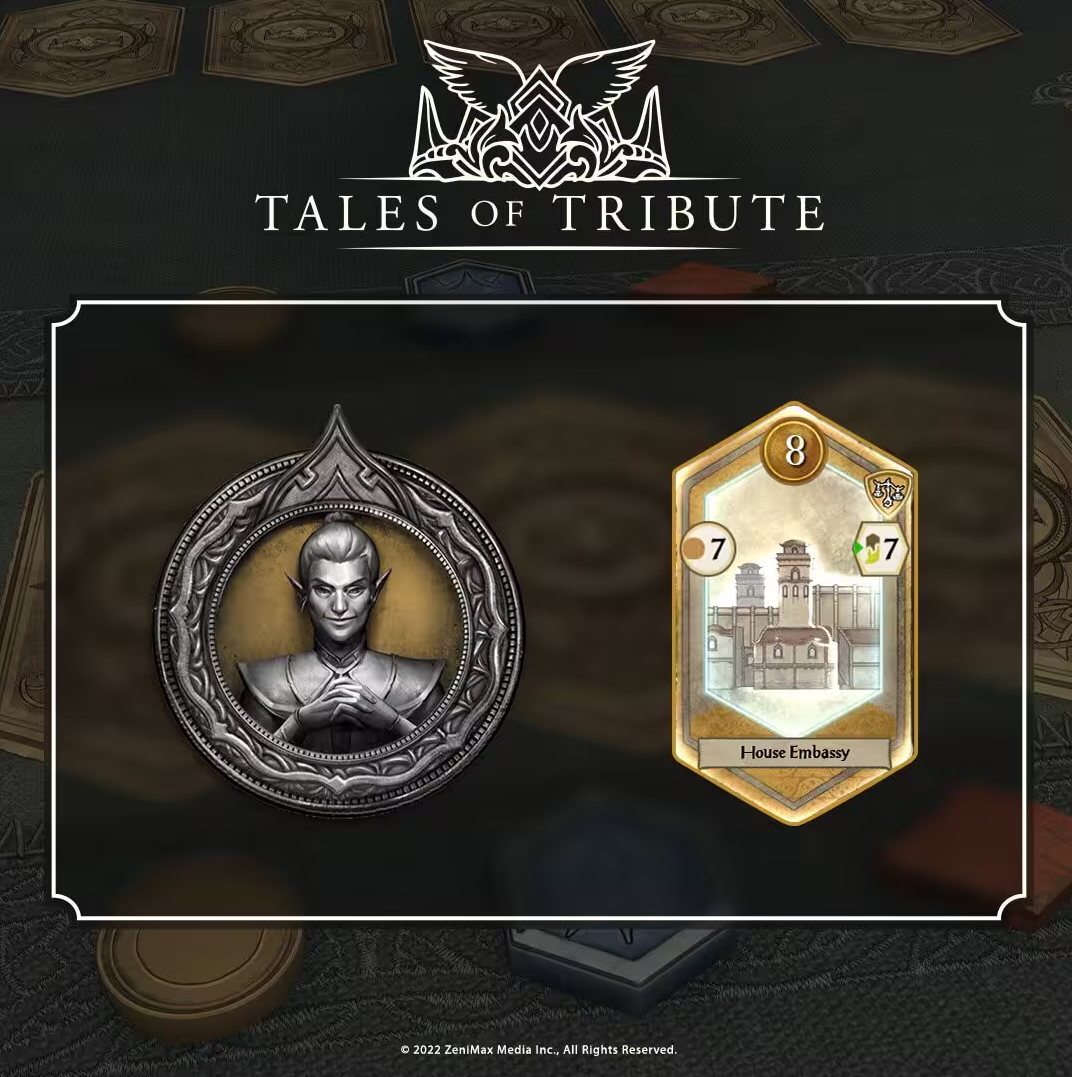
At the start of each Season, players play through five test matches to determine your starting Rank. If a player achiveved a Rank in the prior season, it is calculated into the starting Rank (for example, if you achieved the highest Rank in the last season and won all five test matches, you’d start at the third highest Rank). Once you have your Rank, battling players increases or decreases your Rank score, achieving new Rank titles when your score hits certain thresholds. As an anti-frustration feature, once your score passes a threshold, it cannot go down. Winning and losing matches increases or decreases your score based on hidden modifiers, but I balanced these modifiers so that a player who wins 50% of their matches will always earn more points than they lose it, so achieving the highest Rank title can be done by playing enough matches. Each Rank title earns you better rewards that reset when the season ends.
After earning the highest Rank, players enter the Leaderboard, where experienced and veteran players duke out for the top spots. The top 100 players of each server receive a wide assortment of rare prizes, but your score degrades when not playing. This led to competitive players playing constantly, improving their strategies, and build a thriving semi-pro meta.
Creating Competitive Mode